
The Quiet Revolution of Fifty
Five years ago a planner in Udaipur would take three calls about 250-guest palace weddings before a single call about a 40-guest haveli. The ratio has flipped. The flip is not a recession story and it is not a pandemic story — it is something quieter, and the families making it have thought about it for longer than they will admit at the first call.
The intimate Udaipur wedding — the kind that keeps its guest list under fifty, often under thirty — has become the fastest-growing shape of destination wedding the city handles. The families choosing it are not the families who could not afford the bigger version. They are, more often, the ones who could, did the math twice, and decided that the bigger version was buying them less.
What it was buying them less of is harder to articulate than what it was buying them more of. More food. More logistics. More relatives who were attended-to in the abstract and met in the breach. A planner from Mumbai puts it this way: "At two hundred guests, the bride and groom are the wedding's celebrities. At forty, they are its hosts." Hosts have a different evening. Celebrities, sometimes, have no evening at all.
The shift sits inside a wider shift in how Indian families are willing to define a wedding. The 200-guest expectation was, for two generations, the floor — a function of obligation, ostentation, and the assumption that a daughter's wedding had to involve the whole extended map of cousins, business associates and second-aunts. Families are quietly editing that map. They are choosing the people who have actually been in the room when life happened, and leaving the rest to a separate, smaller reception in the home city.
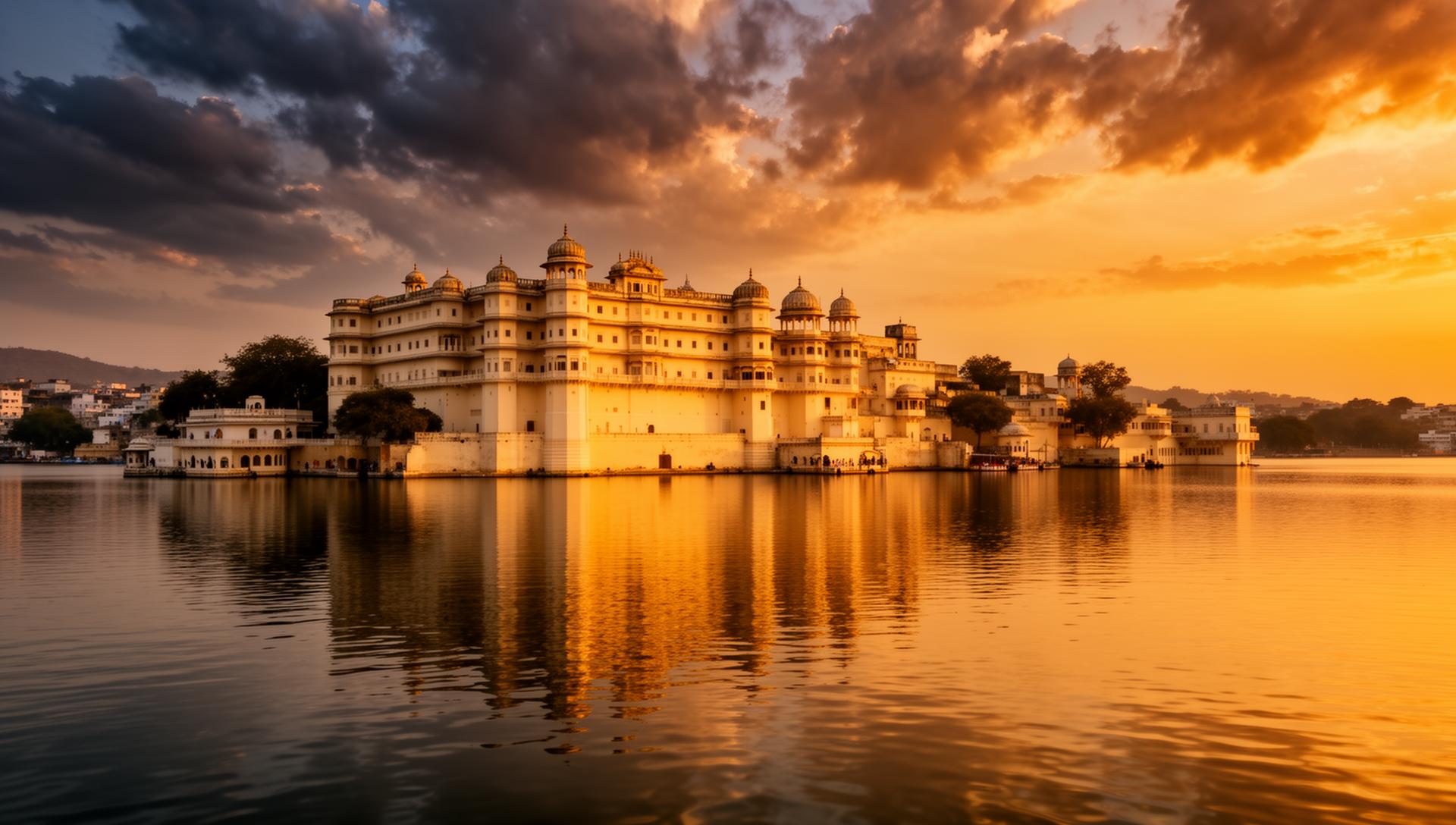
Udaipur takes well to this edit. The city's heritage stock is built, mostly, for the smaller scale: havelis around interior courtyards, single-island palaces, lakeside lawns that hold sixty better than they hold three hundred. A small wedding here does not feel like a downsized wedding. It feels like the building's natural register.
A small wedding is not a cheaper wedding. It is a different one — measured in attention rather than attendance.The House of Udaipurs
What a Small Wedding Lets You Buy Back
The first thing a smaller list buys back is time. Time per guest, mostly — the unhurried hour the bride's father spends with the groom's mother because there are not nine more conversations queued behind hers. Time per ritual, too: a haldi that becomes lunch, not a fifteen-minute photograph break. Time, finally, for the bride and groom themselves to actually be at their own wedding.
The second is attention. A staff team that would otherwise be one attendant per twelve guests becomes one per six, then one per four. The pakora that arrives at a small wedding has been picked up by a person who has met the guest's grandmother by name. This is not a service-level you can purchase at scale. It comes free with smaller scale, and it is the reason intimate weddings are remembered as more luxurious than larger ones with twice the décor budget.
The third is the venue. At forty guests, an entire haveli courtyard is yours; at two hundred, you are renting the same courtyard plus a marquee in the garden that no one really looks at. The smaller list lets the building work as a building — frescoes that get noticed, jharokhas that frame the right faces, a small sitting room upstairs where the older relatives finally sit and drink chai away from the music. The venue stops being decoration and starts being a room.
The fourth, the one no one talks about, is editorial control. A 200-guest wedding has to please its outliers. A 40-guest wedding can choose its colour palette, its menu, its music with confidence that every guest is close enough to either understand the choice or trust it. The mehndi can be an actual mehndi — long, slow, full of one musician — instead of a corporate sangeet trying to entertain the few guests who don't know the family.
What the smaller list does not buy back is novelty. The intimate Udaipur wedding has now been done enough times to have its own conventions, its own clichés, its own slightly tired Pinterest boards. The work is to choose intimacy because the family genuinely wants the kind of wedding it produces — not because the smaller version photographs better on a single grid.
The Math of an Intimate Day
Families assume that fifty guests cost roughly a quarter of two hundred. They do not. The honest ratio, in Udaipur, is closer to forty percent — and once you account for the per-head experiential upgrades that small weddings unlock, families often spend half. The per-guest cost of an intimate wedding is meaningfully higher than the per-guest cost of a large one. The total, however, is meaningfully lower.
The reason is that fixed costs do not scale down. A photographer is a photographer; a heritage levy is a heritage levy; a permit for a fireworks barge on Pichola does not become cheaper because there are forty witnesses instead of two hundred. A small wedding amortises its fixed costs over fewer plates, which is why the per-plate number on its invoice can look surprisingly steep.
What changes is the variable spend. Linen, china, F&B, the décor that scales with footprint, the staff multiplier — all of it shrinks. And it shrinks faster than most families expect, because vendors quietly price intimate weddings as a different product. A florist who charges per arrangement at scale will charge per moment at intimate scale: a single full-room install, not three separate setups.
Where families redirect the savings matters more than the savings themselves. The intimate weddings that age best in family memory are the ones that put the difference into things that cannot be photographed: a second night of dinner instead of a louder first one, a private boat for grandparents who cannot manage the public ferry, a cellist flown in for an hour during the pheras because the bride asked for one piece of music she has loved since she was nineteen.
The math, done honestly, is not "we saved money." It is "we spent it differently." Families who can articulate the difference before they begin choosing vendors arrive at a different wedding than families who only learn the answer in the invoices.
Under fifty guests, the venue stops being a backdrop and becomes a room you actually live in for three days.
Choosing the Venue That Gets Smaller With You
Not every Udaipur venue takes well to a small wedding. The largest palaces, designed for full-house bookings, can make a forty-guest wedding feel apologetic — a few people in a room built for a coronation. The right venue, for an intimate wedding, is one whose default setting matches your scale rather than one being scaled down to meet you.
Two categories work consistently. The first is the converted heritage haveli — the dozen or so private homes-turned-boutique stays in the old city, each holding twelve to twenty rooms around a central courtyard. The courtyard sits twenty-five for dinner without effort, sixty with a small extension. The building's bones are residential, which is why the wedding feels like a long, beautiful house party.
The second is the smaller of the lakeside properties — the boutique stays on the eastern shore of Pichola, the heritage hotels in Hanuman Ghat, the few villas on Fateh Sagar that take exclusive bookings under thirty rooms. These do not have the spectacle of an island, but they do have something an island cannot quite offer: the bride waking in the same building her guests slept in, and the wedding flowing without the pause of a boat ride between every event.
A useful filter at the venue stage is the question the venue asks first. Venues that are right for intimate weddings ask about your relationship with the guests before they ask about your guest count. They want to know which rooms the grandparents will sleep in, whether the bride wants her cousins next door, whether the groom's mother has a knee. Venues that are not right will ask only how many plates and how many nights.
Above all, the right venue gets smaller with you, not just for you. It rearranges itself — closes its restaurant for the residents, gives the wedding party a private breakfast room, lets the family use the rooftop for a private aarti. A venue that just shrinks the seating chart but otherwise carries on as a hotel will leave you, four days later, feeling that your wedding was a side project of someone else's business.
Three Days, Fifty People, One Lake
If we had to draw the shape of an honest intimate Udaipur wedding, it would be three days, around fifty people, and one body of water that all three days return to. Not because it must be Pichola — Fateh Sagar, the Bagore steps, even the small kund inside a haveli, will do — but because the discipline of a single horizon is part of what makes the wedding feel small in the right way.
Day one is arrival, slow. A welcome dinner on a courtyard rooftop, no choreography, no programmed entertainment. The bride and groom move from table to table; the guests, having flown in that day, are tired enough to let the evening end at eleven. This day's only job is to introduce the guests who don't yet know each other, and to let the family stop being hosts for a few hours.
Day two is mehndi and sangeet, lightly compressed. A mehndi morning that drifts into a long lunch on the same rooftop. A sangeet that is short — six performances at most, all by family — and that makes room for an actual dance floor afterwards. A small wedding's sangeet can afford to be a real evening, not a stage show.
Day three is the wedding itself, with deliberate breath built into every transition. The pheras at sunset, the family meal afterwards, and then — the part most weddings forget to programme — the hour after the music stops, when guests don't quite want to leave. At fifty people, this hour is the entire reason the wedding happened. There is no queue at the gate. There is no rush to hand back the venue. People stand in clusters by the water, holding small plates of paan, telling each other things they did not realise they wanted to say.
That hour is not on any vendor's invoice. It is what a smaller wedding makes available. Families who plan for it — who tell the venue not to clear the courtyard until midnight, who keep the kitchen open for one more round of chai, who instruct the photographer to put his camera down — are the ones who, a year later, describe their wedding the same way: "It felt like a long, beautiful evening that we got to hand back to the people we love."
Fifty guests, one lake, three days, and an hour at the end that is the whole point. That, more than any per-plate calculation, is the case for the intimate Udaipur wedding.