
Two Islands, Two Languages
Half a kilometre of water separates Jagmandir from the Taj Lake Palace. From the City Palace ghats, both islands look like the same idea — a low palace floating on Pichola, lit warmly at dusk. They are not the same idea. They have never been the same idea. The families who learn this early choose the right venue. The families who learn it late spend the morning of their wedding in a slow, polite panic about a register the building was always going to set for them.
Jagmandir is older. Built in the 17th century by Maharana Karan Singh as a refuge — most famously for Prince Khurram, the future Shah Jahan, who is said to have studied its dome and proportions before commissioning the Taj Mahal — it is a single, low island palace whose architecture is designed for the open air. Long terraces, broad steps to the water, an enormous central courtyard around the Gul Mahal that opens to the sky. The building's instinct is outward. Weddings here happen under the lake's actual ceiling.
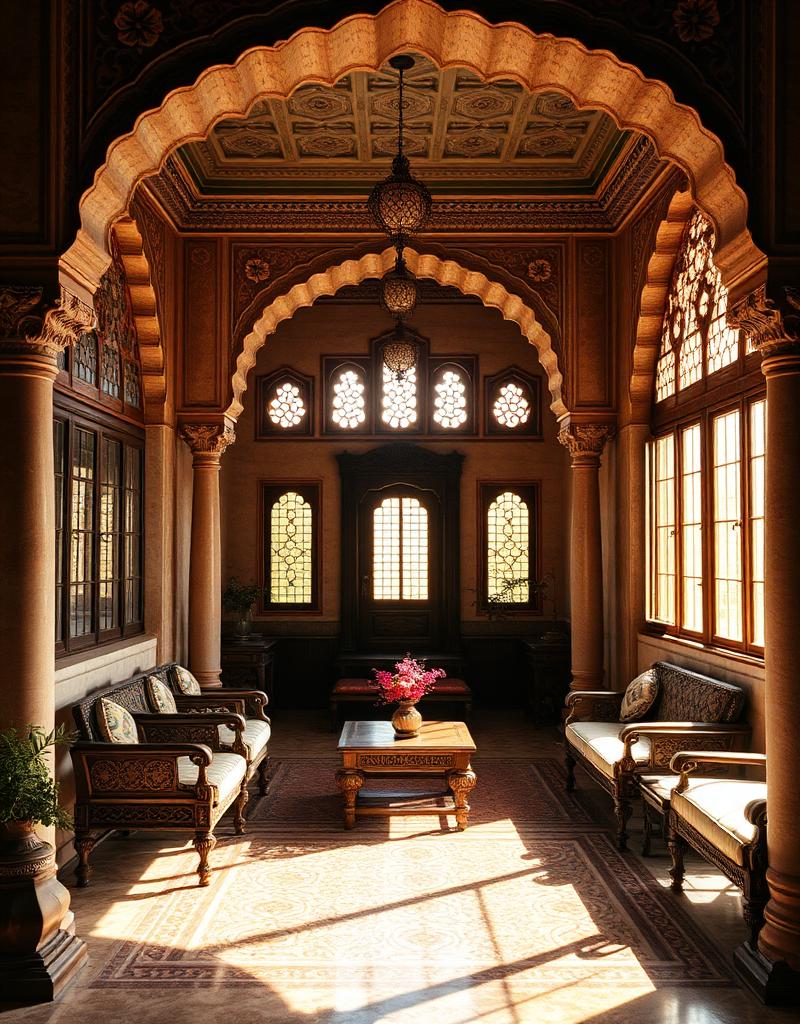
The Taj Lake Palace is younger by a century. Built by Maharana Jagat Singh II in 1746 as a summer pleasure palace and converted to a hotel in the 1960s, it is denser — a marble building that fills its small island almost entirely, organised around interior courtyards and mirrored halls. The lake is everywhere around it, but the architecture turns inward toward its own reflective surfaces. Weddings here happen inside a jewel.
These two architectural instincts produce two completely different weddings, and the honest first question is not "which island can we afford" but "which kind of wedding does the bride and groom actually want." A 200-guest pheras under the Gul Mahal sky is a different ceremony, in feel and memory, from a 200-guest pheras in a mirrored hall whose ceiling is a constellation of glass.
Most families do not articulate this question until they have visited both. We would suggest articulating it before, on a quiet evening at home, with no decorator in the room. The answer that comes back is, more often than not, the answer the family already had — and it makes the venue visit a confirmation rather than a vacillation.
Jagmandir gives you the lake. The Taj Lake Palace gives you the lake reflected back.The House of Udaipurs
The Boat Ride Sets the Register
Both islands are reached only by boat, and the boat is the wedding's first true ceremony. By the time guests step off the ferry, the venue has already told them what kind of evening they are about to have. The two islands give you two different opening lines.
From the Bansi Ghat jetty, a guest going to Jagmandir takes a wider, slower wooden vessel — the historic Mewar boats, low to the water, with the city palace receding behind them and the open lake widening ahead. The crossing is around six minutes. It feels like a small voyage. By the time the guest steps onto Jagmandir's broad water steps and looks back at the city, they have already psychologically arrived somewhere remote.
From the Taj jetty, the boat is smaller, faster, glass-canopied. The crossing is two and a half minutes — Taj Lake Palace is closer to shore than Jagmandir is — and the experience is more ceremonial than elemental. A liveried attendant rises as the boat approaches; rose petals are sometimes scattered on the water; the entrance to the palace is theatrical, immediate. The guest does not feel they have voyaged. They feel they have been welcomed into a single, contained world.
These two openings cannot be exchanged. A bride who wants the wedding to feel like a slow inhabitation of a remote palace will be poorly served by the brisker arrival ritual at the Taj. A bride who wants the wedding to feel like a polished, contained ceremony will find Jagmandir's longer, more elemental crossing slightly unsteady — six minutes is a long time for guests in heavy lehengas, and the open lake can produce wind, sun and the occasional spray.
Logistics follow the register. Jagmandir's larger, slower boats can carry around 25 guests at a time and operate continuously for an evening event; the Taj's smaller boats carry fewer but cycle faster. Both islands have done weddings of 200+ for decades and have the choreography to handle the queueing. The question is not capacity. The question is the first sentence the wedding writes for its guests.
Jagmandir: Open-Air, Long Tables, Older Stone
Jagmandir is the wedding for families who want the lake to be a co-host. Its central courtyard, anchored by the Gul Mahal, holds long-table dinners for 200 with room left over for a sangeet stage. Its broad water-facing terraces sit smaller groups at sunset with nothing between them and the City Palace lit gold across the water. Its dome — the one Khurram is said to have studied — frames the pheras with a kind of weight that no marquee can imitate.
The building's older stone matters. Sandstone and lime, scrubbed clean by three centuries of monsoons, takes light differently than the Taj's marble. At sunset, Jagmandir glows; at night, it absorbs the lamps and gives them back warmer. Photographers who shoot here often describe it as a "honest" building — what you see is what shows up in the frame, with very little of the trickery a more reflective surface invents.
The open-air format also means weather is part of the wedding. Winter evenings on Jagmandir can be sharp; March and April are perfect; May is hot; September and October are humid. The island has indoor backup for the pheras, but the heart of a Jagmandir wedding is its terrace, and families who book the island are buying the terrace, not the contingency. The honest planning conversation is when the wedding will happen, what the wind off the lake is doing at that hour, and whether the guests will be comfortable in their formal clothes.
The other thing Jagmandir gives you, that the Taj Lake Palace cannot, is daytime. The island is large enough to programme a full daytime mehndi or haldi outdoors, with its own quiet corners for the rituals that don't need an audience. Many Jagmandir weddings begin on the island in the morning of their second day and continue through to the pheras at dusk on day three — a near-continuous occupation that lets the family genuinely live in the palace rather than visit it for a single ceremony.
The trade-off is intimacy. Jagmandir is grand. A small wedding on Jagmandir can feel under-occupied unless the family deliberately uses only the smaller terraces and leaves the central courtyard for one big moment. The island wants 120-220 guests. Below 80, families are often happier, and cheaper, on a different venue altogether.
The boat ride is not transit. It is the first ritual of the wedding, and the two islands give you two different opening lines.
Taj Lake Palace: Mirrored Halls, Closer Light
The Taj Lake Palace is the wedding for families who want the building, not the lake, to be the protagonist. Its interior halls — the Sheesh Mahal, the Bada Mahal courtyard, the smaller Surya Prakash — are smaller in footprint and richer in surface. Mirrors, frescoed walls, marble lattices, the soft amber of a building lit from within. A wedding here is a wedding inside a jewel-box, and the photographs that come out of it have a specific, contained luminosity that Jagmandir's open air does not produce.
Closer light is the right phrase for it. Because the palace fills its island, every interior space feels intimate even when it is set for 150. The pheras under a mirrored ceiling, with the lake visible only as a thin band of dark glass through the lattices, is a deeply ceremonial register — closer to a temple than a terrace. Brides who want the wedding to feel formal, ritual, and architecturally close find this register more correct than Jagmandir's broader sky.
The Taj's small island is also its constraint. The maximum comfortable wedding size is around 150–180 guests, and even at that scale the choreography is dense — guests move from the boat to the welcome corridor to the pheras hall to the dinner courtyard within the same compact footprint. The wedding has a tempo Jagmandir does not have: more ceremonial, more punctual, more shaped by the building's own rhythm. Families who like that tempo love it. Families who wanted to "use the lake" sometimes feel the lake is just outside the window the whole evening.
Daytime occupation is harder. Because the palace is a working hotel with non-wedding guests in residence, full daytime exclusivity for haldi or mehndi is rare and expensive; most Taj Lake Palace weddings book the interior halls for the evening events and hold their daytime functions on the mainland — at the City Palace, the Leela, or a haveli — and ferry guests across only for the wedding's main moments. This is a different rhythm to Jagmandir's continuous occupation, and worth being honest about with the family before the booking is made.
What the Taj Lake Palace gives back, at its best, is a wedding that feels intensely curated — a building that has hosted royal occasions for nearly three centuries doing what it was designed to do. The rituals fit the rooms; the rooms fit the rituals. There is a reason this venue, more than any other in Udaipur, ends up in the wedding films that travel internationally. The building photographs the way it feels.
The Choice Is Less About the Venue Than the Bride
After fifteen years of running both kinds of weddings, the planners we know in Udaipur have stopped recommending venues based on guest count or budget. They recommend based on the bride and groom — specifically, on what kind of evening they actually want to remember.
The bride who wants to step out of her room, climb broad stone stairs in the open air, and have her pheras under a 17th-century dome with the City Palace glowing in the distance is a Jagmandir bride. The bride who wants to step into a mirrored hall, have the lake visible only as a soft frame around the ceremony, and feel the building wrap itself around the ritual is a Taj Lake Palace bride. Neither answer is more elegant than the other. They are different elegances, and the wedding will feel right or slightly off depending on whether the building's instinct matches hers.
Budget, for once, is not the deciding factor. Both venues land in the same broad range for a fully-exclusive wedding of 150 guests over two events; the differences are in the variable spend and the daytime requirements. Jagmandir typically demands more daytime occupation and weather contingency budgeting; the Taj Lake Palace typically demands more mainland coordination and ferry choreography. The totals, properly accounted for, end up within shouting distance of each other.
The honest deciding factor is, almost always, the wedding's centre of gravity. Families with grandparents and small children — who will need stable, accessible terraces and not too much boat-shuttling — often prefer Jagmandir's larger footprint and steadier crossing. Families with photographers who specialise in tight, ceremonial frames; families whose guest list tilts urban and international; families whose bride has been thinking about a mirrored-ceiling pheras since she was twenty — these tend to choose the Taj Lake Palace, and to spend a year quietly relieved that they did.
If you cannot decide, visit both at the same hour of the day on the same kind of evening. Stand in Jagmandir's central courtyard at 5:45 in the evening with the dome above you and the lake all around. Then take the next boat to the Taj Lake Palace and stand in the Sheesh Mahal at 6:30 with the lamps just being lit. The right venue, by the time you have stood in both, will have made the decision for you. Both are correct. They are correct for different weddings.