
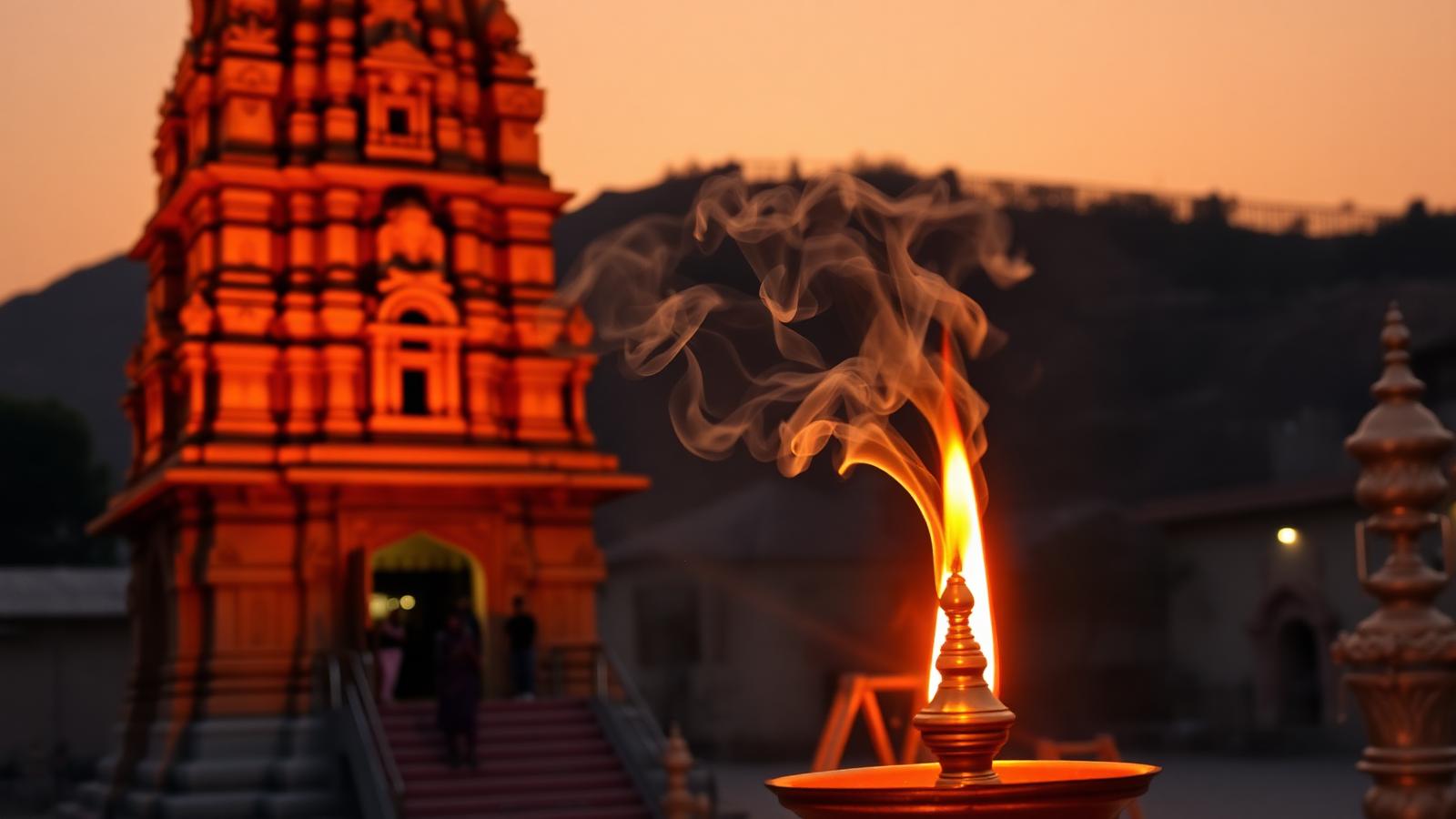
The Temple at the Top of the Steps
Built in 1651 by Maharana Jagat Singh I, Jagdish temple sits two hundred metres north of the City Palace gate, at the top of a steep flight of marble steps flanked by two stone elephants. It is dedicated to Vishnu in his form as Jagannath, lord of the universe. It has been in continuous worship for three hundred and seventy-five years.
Most visitors photograph the elephants, climb the steps, take three photographs of the carved exterior, and leave. The exterior is genuinely worth photographing — it is one of the finest examples of Mewar temple architecture surviving in the city. But the temple is not, principally, a monument. It is a working temple. The evening aarti is the moment in the day when this is most apparent.
The aarti is twenty minutes. The hour around it is what people quietly come back for.The House of Udaipurs
When and Where to Sit
The evening aarti is performed daily at approximately 7:15pm in winter (October–February) and 7:45pm in summer (March–September). Timings vary slightly by lunar calendar; check at the gate when you arrive earlier in the day or ask your hotel.
Arrive thirty minutes before. Climb the steps slowly. Remove your shoes at the small stand to the left of the entrance — there is no charge but a five-rupee tip is customary. Walk clockwise around the inner sanctum once, then sit on the marble floor on the right-hand side, halfway between the entrance and the inner shrine. This is the side most pilgrims sit on, the acoustics are best, and you can see the priest clearly.
Do not, under any circumstance, sit on the steps directly in front of the inner shrine. That space is left clear for the priest and the offerings. Politely, but firmly, you will be moved.
The Twenty Minutes
The aarti begins without announcement. A bell. A second bell. Then the conch. The priest, in white and saffron, lights the lamp inside the inner shrine and begins the slow circling of the lamp before the deity. The drumming begins at a low pulse and rises slowly.
For the next twenty minutes you should do almost nothing. Sit still. Do not photograph. The lamp will be circled in widening figure-eights. The bells will be rung in a slow rhythm and then a faster one. The conch will sound twice more. The pilgrims around you will join in the chanting; you do not need to.
At the climax — you will know it; the bells, drum and conch all sound together — the priest will bring the lamp out. He will offer it to the line of pilgrims. Cup your hands palm-down briefly over the flame, then touch your forehead. Do this if you wish to; it is welcomed but not required.
Then the prasad — usually a small piece of sweet — will be passed down the rows. Accept it with your right hand. Eat it before you leave the temple.
- Aarti time
- Approximately 7:15pm winter, 7:45pm summer. Confirm at the gate or with your hotel — varies by lunar calendar.
- Arrive
- 30 minutes early for the right seat. The temple fills in the last ten minutes.
- Dress
- Shoulders covered for women and men; no shorts above the knee. A light shawl in winter.
- Photography
- Permitted on the exterior; discouraged inside during the aarti. Phones away is the recommendation.
A temple photographed is a temple half-visited.The House of Udaipurs
The Half-Hour After
Most visitors leave within five minutes of the aarti ending. The priest withdraws. The crowd thins. The temple becomes, suddenly, almost empty. This is the unadvertised second half of the visit.
Stay. Sit for ten more minutes. The drumming has stopped but the small bells in the outer shrines still ring occasionally as the last few pilgrims complete their rounds. The carved exterior catches the last city light. The marble floor is cool. The whole temple, at this hour, settles back into the slow rhythm it has had for three centuries.
Walk down the steps without checking your phone. The Old City lanes outside the temple are at their best in the half-hour after sunset, with the chai shops lighting their stoves and the lanes filling with the slow walk back from prayer. You will have spent an hour at Jagdish, and almost none of it on a screen. This is the trip people quietly come back for.