
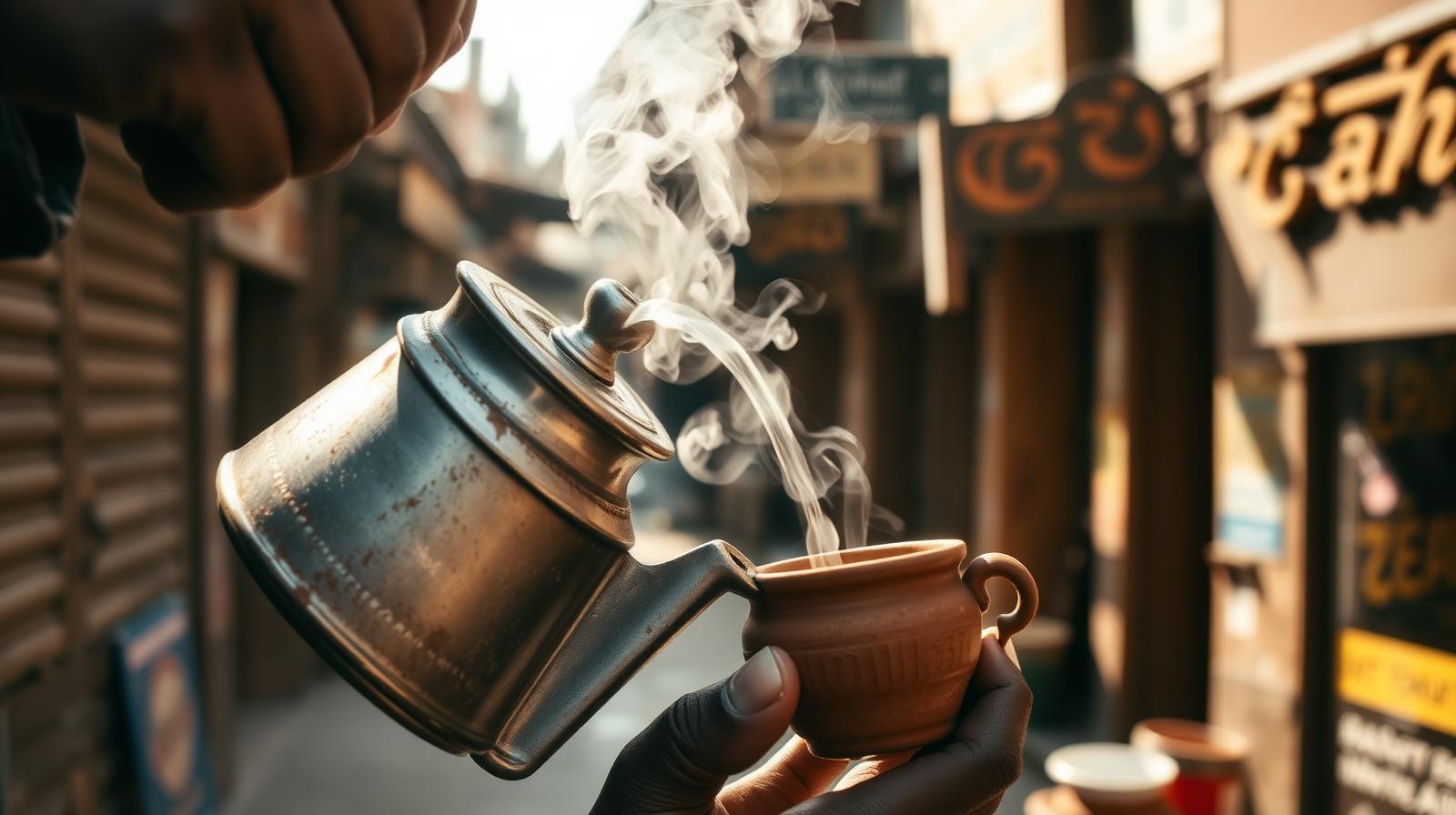
The Lane Before the City
Hathi Pol is one of the four original gates of the walled city of Udaipur. By 2026 it is also the first part of the Old City to wake up — by 6:15am the wholesale flower vendors are unloading marigold garlands at the temple end, the milkmen on cycles are doing the door-to-door round, and the chai stalls along the main lane and its three side branches are firing the first kettles of the day. The light at this hour is low, the lane is empty of tourists, and the chai is the day’s first transaction.
A slow chai walk through Hathi Pol is the most honest food tour the Old City offers. The route is short — about 800 metres if you stay on the main lane, slightly longer if you branch — and the price of the entire walk, including six chais and the occasional kachori, is rarely more than ₹150 in 2026 prices. The whole loop takes around 75 minutes if you walk it properly: stop, drink, walk, stop, drink, walk.
The point of the walk is not the chai, exactly. The chai is the punctuation. The point is the lane in the hour before it becomes a lane — the conversations at each counter, the rhythm of the milkmen, the temple bells starting around 6:45, the smell of frying kachoris in the mid-section by 7:00, and the slow re-entry of motor traffic by 7:30 that ends the morning entirely.
You do not order chai at Hathi Pol. You stand near the kettle and you are noticed.The House of Udaipurs
The Six Counters
Six chai counters, in our six-month survey, consistently make the best chai on the Hathi Pol stretch. We are deliberately not naming them by name — they are small operations, the lane changes year on year, and the joy of the walk is finding them in order rather than ticking off a list. We will describe them by what they are doing, and by where on the lane they sit.
The first counter, just inside the gate on the right, runs a thicker, sweeter, more milk-forward chai — adrak (ginger) only, no other spice. The second, fifty metres further on the left, runs a classic masala chai with crushed cardamom and a pinch of clove; the chai-wallah here has been at the same spot for thirty-one years. The third sits at the small chowk where the lane branches; their chai is faintly smoky from the wood-fired stove they still use. The fourth is in the left branch — a kulhad-only operation, no glass cups, slightly more expensive at ₹15 (most of the others are ₹10), and worth it.
The fifth counter sits adjacent to a small temple in the right branch and serves a chai with a single tulsi leaf in the cup; the texture is lighter than the others. The sixth is at the far end of the main lane, just before it opens out into Bara Bazaar, and serves the strongest, most concentrated chai of the morning — the cup that is meant to be the last, walked away with rather than drunk standing.
- Price per cup
- ₹8–15 in a kulhad; ₹6–10 in a small glass. The whole six-counter walk costs around ₹70–100.
- Best window
- 6:15am–7:30am. After 8am the lane fills with two-wheeler traffic and the rhythm changes entirely.
- Walking distance
- ~800m on the main lane, ~1.4km if you branch into both side lanes.
The Etiquette of the Counter
Ordering chai in Hathi Pol is not really ordering. You stand near the kettle, you are noticed within thirty seconds, and a cup is poured for you. There is no menu. There is rarely a printed price. The cup arrives, you drink it slowly, you place the empty kulhad on the counter (or in the small mud bin nearby — kulhads are unglazed terracotta, designed to be returned to the earth), and you pay on the way out. Trust runs both ways.
A first-time visitor often makes the mistake of standing in line behind the locals at the counter. There is no line. The chai-wallah serves in the order he notices people, and noticing is partly about how present you are at the counter — a quiet but visible presence rather than a queue position. Stand close, do not look at your phone, accept the cup with both hands when it arrives. That is the entire transaction.
Do not photograph the chai-wallah without a small nod of permission first. Most will agree; some will gently decline. The lane is a place of work, not a set. A small tip of ₹10–20 over the price is unusual but quietly appreciated, especially at the counters where the same family has run the operation for two or three generations.
The kulhad is not a container. It is part of the recipe.The House of Udaipurs
What to Eat With It
Chai in Hathi Pol is rarely drunk alone. The lane has, over decades, evolved a small ecosystem of breakfast counters that sit alongside the chai stalls and serve the dishes the chai is meant to accompany. Two are essential.
The first is the pyaaz kachori counter in the mid-section of the main lane, which begins frying at around 6:45am and runs out by 9:30. The kachoris are small, hand-sized, and served on a paper plate with a smear of green chutney and a tamarind chutney. Two kachoris and a chai is the local breakfast; the entire transaction is around ₹40 in 2026.
The second is the poha counter in the side lane near the temple, which serves a faintly lemony, lightly garnished poha out of a large flat steel pan. A small portion is ₹30. A small portion of poha and a glass of chai is the lighter local breakfast, and the one to choose if you are walking the lane on a hot summer morning when the kachoris feel heavy.