
The Three Kachoris
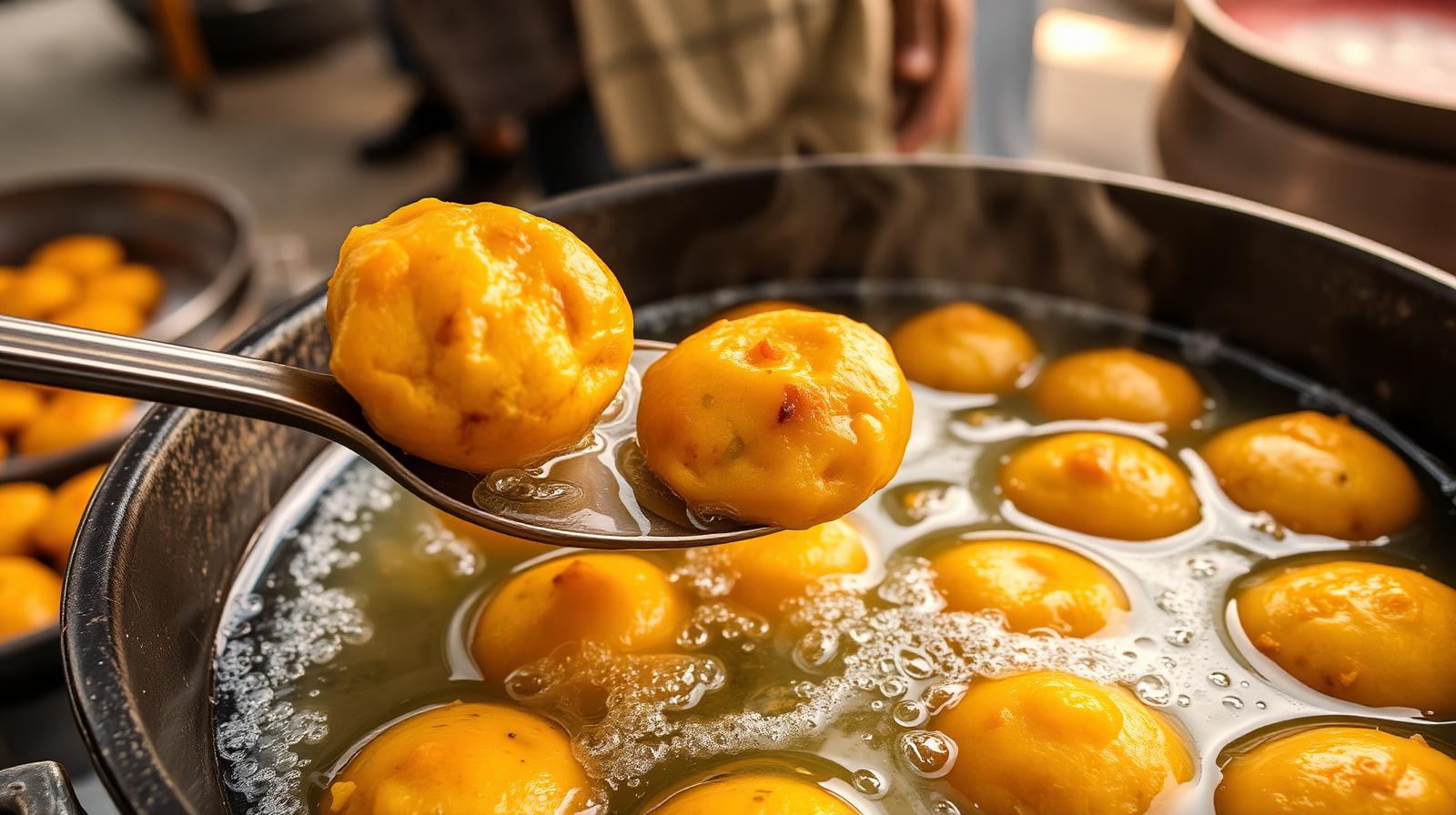
Udaipur’s breakfast counters serve, broadly, three kinds of kachori. The pyaaz kachori — a small, savoury, spiced-onion-stuffed pastry, deep-fried until the outer crust is crisp and the inside is soft and aromatic — is the most common, the most honest, and the one almost every counter starts the morning with. The mawa kachori is its sweet sibling, stuffed with khoya, sugar and crushed nuts, dipped in sugar syrup, and eaten warm. The dal kachori is the regional cousin, stuffed with a spiced moong dal mixture, drier inside, more substantial, and eaten typically with a tamarind chutney.
A kachori morning in Udaipur is not a single counter. It is a route. Six counters, walked in order between 7 and 10am, give you the entire spectrum of the dish — and reveal the surprisingly large differences in dough, filling, oil and chutney between counters that, at first glance, all look the same. The small differences are the entire point of doing the walk.
We are deliberately describing the route by area rather than naming each counter. Counters change hands; some retire, some hand the kadhai down to a son-in-law, some shift two doors over. The walk is more reliable than the names. Anyone in Udaipur with a serious interest in breakfast will direct you to the same six approximate locations.
A kachori cooked in fresh oil is a different dish from one cooked in tired oil. The oil is the recipe.The House of Udaipurs
The Route, in Order
Begin at 7:00am at the Hathi Pol gate. The first counter, just inside on the left, fries pyaaz kachoris from 6:45 onward; arrive while the first batch is coming out and the dough has the lightest crust of the morning. Two kachoris and a small kulhad of chai is around ₹40 in 2026. Eat at the counter; do not walk away with them — the kachori cools fast and the texture changes inside ten minutes.
Walk south toward Jagdish Chowk. The second counter, in the small lane behind Jagdish Temple, makes a slightly larger, slightly spicier pyaaz kachori with a darker masala in the filling — more pepper, more crushed coriander, less sugar. ₹15 a piece. The third counter, ten metres further, is a dal kachori specialist; the inside is drier, the chutney is the headline, and the kachori is heavier than it looks. Two of these will hold you until lunch.
Cross into Bara Bazaar. The fourth counter, near the cloth merchants’ row, is the morning’s mawa kachori — sweet, ghee-rich, dipped in a thin sugar syrup. ₹25 a piece, only one is recommended unless you are skipping lunch. The fifth, deeper into Bara Bazaar, is a corner-shop specialist that does a smaller, lighter pyaaz kachori in pure ghee rather than oil, and is consequently the most expensive of the route at ₹25 a piece — and the one regular eaters quietly insist is the best of the morning. End at the sixth counter near Bapu Bazaar, which serves a kachori-and-poha combination that is the closing dish of the walk and a complete meal in itself for ₹50.
- Cost of the full six-counter walk
- ₹150–220, including chai and a final poha plate.
- Best window
- 7:00–9:30am. Counters typically run out of fresh kachoris between 10:00 and 10:30.
- Walking distance
- ~1.6km, roughly 2.5 hours including eating time.
How To Read a Kachori
Not every kachori on the route is going to be excellent. Two or three on any given morning will be — the rest will be merely good — and learning to read a kachori as you stand at the counter is part of what makes the walk repeatable.
The first thing to look at is the oil. A counter that is frying in fresh, light-coloured, near-translucent oil will produce a crisp, light kachori with no aftertaste. A counter that is frying in older, darker oil will produce a heavier, oilier kachori with a slightly bitter finish. The oil is the recipe; a kachori cooked in tired oil is, frankly, a different dish.
The second is the dough. A good kachori dough is short, slightly crumbly, and just translucent enough to hint at the filling underneath when you break it open. A pale, doughy, blond crust signals a counter that has lowered the oil temperature to manage queues; the kachori will not crisp properly. Walk on. The third is the chutney — a counter that grinds its green chutney fresh in the morning will have a bright, almost grassy chutney; a counter using yesterday’s chutney will have a darker, duller version. None of this requires expertise. Standing at the counter for thirty seconds is enough.
Eat the kachori at the counter. The walk back is when it cools.The House of Udaipurs
The Last Counter
Closing the walk at the kachori-and-poha counter near Bapu Bazaar is part of the architecture of the morning. By the time you arrive — typically around 9:45am — the lane is fully awake, the counters are at peak rhythm, and the morning’s last batches are coming out. The poha here is the lighter half of the closing meal: lemony, faintly turmeric-yellow, scattered with sev and pomegranate seeds. The kachori, eaten alongside, is small and crisp.
The full breakfast — kachori, poha, a glass of buttermilk — is around ₹60 in 2026 and finishes a walk that has, over three hours, cost less than ₹220 and given you six different versions of one of India’s best breakfast dishes. A serious cappuccino-and-croissant breakfast at any of the lakeside cafés costs between ₹400 and ₹650, by way of comparison, and gives you exactly one breakfast.
Walk slowly afterwards. Drink water. The walk is, by 10am, finished — the lane begins to shift into the work-day rhythm, the kachori counters wind down, and the chai-wallahs change kettles for the smaller mid-morning batch. The morning is over. The next one is twenty-three hours away. The right move is to come back the next day, in a different order, and notice the differences. The same walk, eaten three times in a week, is a small but reliable apprenticeship in how Udaipur eats.