
What Paan Actually Is
Before walking into Hathi Pol, it is worth understanding what you are about to be handed. Paan is one of the oldest food preparations on the Indian subcontinent — references to it appear in Sanskrit texts of the first millennium BCE — and the version sold at a working old-city counter is closer to a small piece of edible architecture than to a snack.
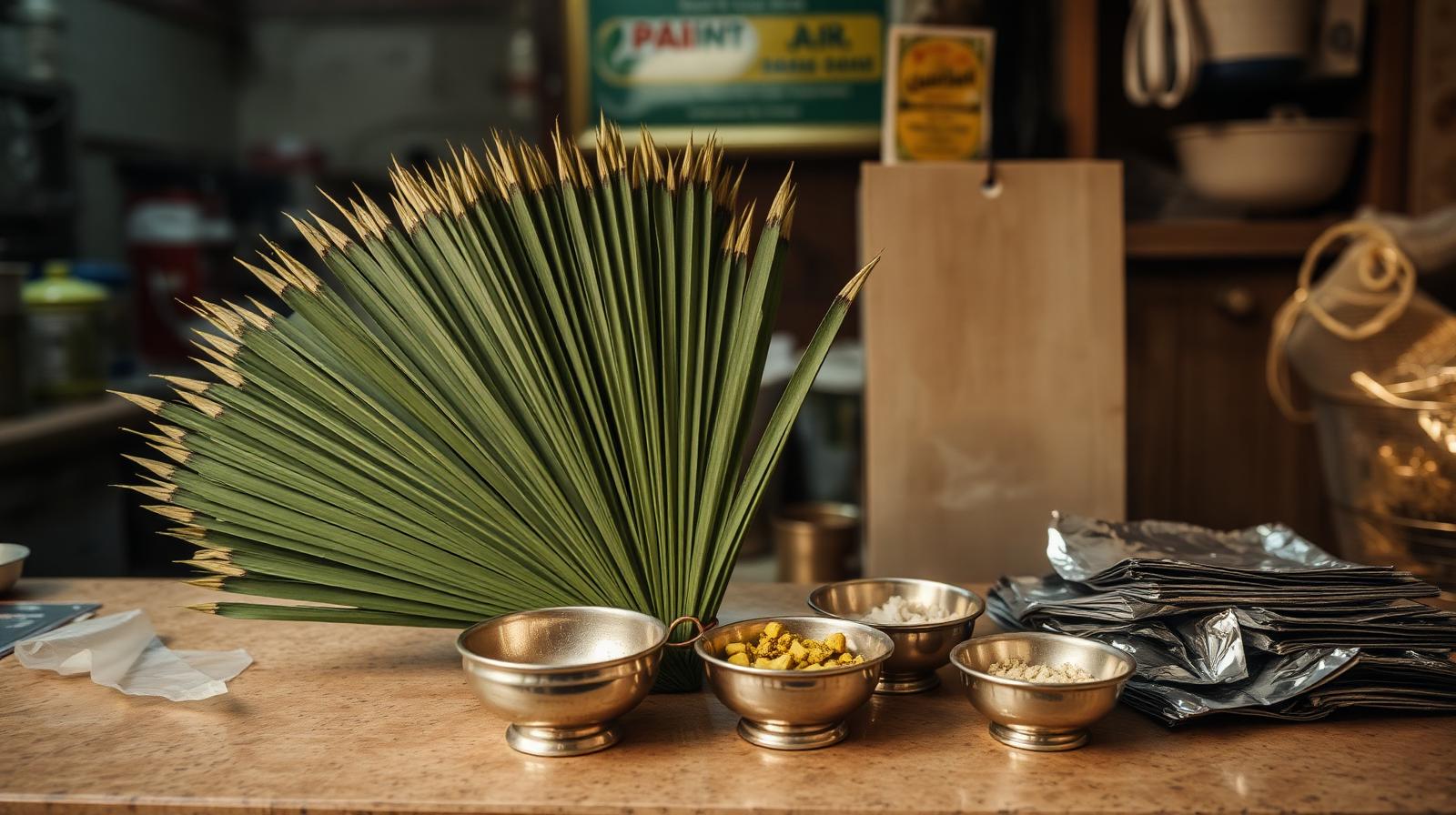
The base is a fresh betel leaf — flat, deep green, slightly bitter. On it the paanwala spreads two pastes: chuna (slaked lime) and kattha (a dark brown extract from the heartwood of the catechu tree). On top of these go a precise selection of fillings — chopped supari (areca nut), cardamom, fennel seeds, gulkand (a sweet rose-petal preserve), grated coconut, sometimes silver leaf, sometimes a small piece of menthol crystal. The leaf is then folded into a small triangular package, sometimes secured with a clove, and handed to you to be eaten in a single mouthful.
There are three broad families. Meetha paan is sweet, full of gulkand and coconut and rose, designed as a digestive after a heavy meal. Sada paan is the plain version — leaf, chuna, kattha, supari, cardamom — and is what regulars at a counter usually order. Tambaku paan contains tobacco; we strongly recommend skipping this version, particularly on a first visit. Within these families there are house specialities: a Banarasi-style meetha, a chocolate paan (a 1990s innovation that has settled into the canon), the various 'fire paan' theatricals which are mostly tourist performance.
The taste, the first time, is unfamiliar. The chuna alkalises the mouth; the kattha is astringent; the supari is bitter; the cardamom and rose come in only in the second and third chew. By the time you have finished it, the leaf has produced a long, layered taste that an Indian meal-eater associates with the end of dinner and a foreign visitor associates, often, with the moment they realised what the cuisine was actually about.
Paan is not a snack. It is a digestive ritual, eaten standing, in a single mouthful, after a meal. The right time to be at a Hathi Pol counter is between 7 and 10 in the evening, after dinner, with the regulars who have just walked the lanes from their own dining tables. This is the rhythm the counters were built around.
Paan is not a snack. It is a digestive ritual, eaten standing, in a single mouthful, after a meal.The House of Udaipurs
The Geography of Hathi Pol
Hathi Pol — literally 'elephant gate' — is the principal northern gate of the old city, originally large enough for a Maharana's elephant procession to pass through. The neighbourhood that wraps around it has been the city's main commercial area for nearly four centuries, and the paan counters of Hathi Pol sit inside a tight grid of lanes that have not significantly changed in plan since the 18th century.
The four paan counters we are describing all sit within a 200-metre walk of the gate itself. Without naming them — for the same reasons of preservation we have applied throughout this series — we will say that two are on the eastern lane that runs south from the gate, one is on the western lane, and one is tucked into a small intersection where three lanes meet about 150 metres south. Walking the loop from the gate, anti-clockwise, takes around fifteen minutes and passes all four.
Each counter is small. Most are no larger than three metres wide; the front is open, the paanwala stands behind a marble or steel counter loaded with brass and steel containers of fillings, the betel leaves are stacked in a damp cloth to one side, and the customer stands on the lane outside. There are no stools, no menus, no prices written on the wall. The paanwala makes eye contact, asks 'kya banayein?' (what shall I make?), and the regulars answer in single words: 'meetha', 'sada', 'banarasi'.
Distinguishing a working counter from a tourist counter takes ten seconds of looking. The working counter has a queue of three to six people at 8pm, all visibly local, all paying in small notes and coins. The tourist counter has a small display board with English transliterations, sometimes a printed menu, sometimes a 'paan tasting' offer. Both will sell you a paan; only the first will sell you the paan we are recommending you eat.
The price at a working counter, in 2026, is ₹20 for a sada paan, ₹40 for a meetha, ₹60 for a Banarasi or chocolate paan, ₹100–150 for the silver-leaf varieties. The tourist counter charges roughly twice this, sometimes three times. Pay cash; many of the older counters do not accept UPI, and the ones that do prefer cash anyway.
How to Order Without Embarrassing Yourself
There is a small etiquette to ordering at a working paan counter. None of it is difficult. All of it changes the conversation between you and the paanwala, and it determines whether you are treated as a regular passing through or as a curiosity to be tolerated.
Wait your turn. Do not wave money or step in front of the queue. The paanwala will see you. He will work through the regulars, who order in single words and pay in correct change, and then he will turn to you. The pause before he asks is part of the system; do not fill it.
Order in two or three words. 'Ek meetha, please' (one meetha, please) is correct and will be understood immediately. 'Could you please make me a sweet paan with rose and coconut and not too much chuna?' will be understood but will mark you as someone to whom the paan needs to be explained. The regulars do not explain; the paan is what the paanwala makes it. Trust the counter.
Eat it standing, on the spot, in one mouthful. The triangular packet is folded so that biting one corner releases the fillings cleanly into the mouth; bite, chew slowly, do not talk for the first thirty seconds. Walking away with a paan in your mouth is fine; tucking it into a tissue 'for later' is not — paan is a fresh preparation and degrades within ten minutes.
Do not photograph the paanwala without asking. Most are happy to be photographed if asked first; almost all are uncomfortable being photographed mid-fold, with hands in the kattha, by a stranger. A polite 'photo le sakta hoon?' (may I take a photo?), waited for, almost always produces a yes and sometimes a deliberately staged frame. The unasked photograph is the kind of small rudeness that the regulars notice and that makes the counter slightly more tourist-wary the next time.
By the third visit, the paanwala will recognise you. This is the closest a visitor comes, in a few days, to being known in the old city.The House of Udaipurs
What to Skip
Not all paan, and not all paan counters, are worth your time. Some of what is sold under the name in Udaipur's tourist areas is theatrical, tobacco-laced, or simply badly made. A short list of what to skip.
Skip the 'fire paan'. This is the version where the paanwala lights a small piece of menthol or camphor on top of the folded paan and hands it to the customer to bite while it is still flaming. The performance is dramatic; the paan is mediocre; the experience is, frankly, designed for video. The four working counters in Hathi Pol do not sell fire paan. The shops that do are advertising their primary product clearly.
Skip the tobacco varieties unless you specifically know you want them. Tambaku paan and zarda paan contain tobacco, often nicotine-strong, and the addictive load is significant. The taste is harsher than the meetha or sada varieties, and the after-effects — including a head rush and a brief lightheadedness — are not pleasant for a first-time taster. Indian regulars who chew tambaku do so for the nicotine, not for the leaf. There is no aesthetic reason to start.
Skip the ready-made paan packets sold at general stores and at some hotel shops. These are vacuum-sealed, often a week old, and bear the same relationship to a fresh counter paan that an aeroplane sandwich bears to a restaurant meal. If you are leaving the city and want to take paan home, ask a working counter to make four or five fresh, wrapped in pan leaves and silver foil, and eat them within twelve hours.
Finally, skip the urge to try every variety in a single visit. A paan is a substantial mouthful; two paans in a single sitting is the upper limit for a first-time eater, and three will produce mild nausea and a headache. The right approach is one paan after dinner across three or four evenings — a slow expansion of taste rather than a single overwhelming sampler.
Why the Counter Itself Matters
The four working paan counters of Hathi Pol are not, in any individual sense, extraordinary. The paan they serve is competently made; the variations between them are subtle. What makes them worth writing about is what they collectively are — a small, intergenerational trade infrastructure that has continued, almost unchanged, through three generations of customers and the city's transformation around them.
Each of the four counters has been run by the same family for at least fifty years, and in two cases for over a century. The current paanwala is the grandson, sometimes the great-grandson, of the man who set up the counter. The recipe for the meetha paan in particular — the balance of gulkand to coconut, the addition or absence of cardamom, the inclusion of a single piece of menthol — is a family signature that has been passed down through demonstration rather than through writing. There are no recipe books at any of these counters. There are only the hands.
This kind of trade continuity is becoming rare. The economic pressures on small old-city counters are significant — rising real-estate values, the appearance of branded paan chains in newer parts of Udaipur, the slow shift of younger generations into other professions — and at least one of the four counters we used to write about ten years ago has now closed. The remaining four are not guaranteed to be there in another twenty years.
Visiting them, frankly, is a form of small support. A ₹40 paan, eaten standing, paid in cash, is a small contribution to the continuity of a family business that has fed the same neighbourhood for half a century. We are aware that this sounds romantic. It is also true. A counter that does fifty paans an evening at ₹40 each is, in financial terms, a marginal business; the difference between marginal and unviable is sometimes measured in the kind of small but consistent traffic that this essay, and visitors who behave well at it, can produce.
Walk the four counters once, in a single evening, and choose your favourite. Return on a second evening and order the same paan. By the third visit, the paanwala will recognise you. This is the closest a visitor comes, in a few days, to being known in the old city — and it is, in our long experience, one of the quietest and most valuable forms of access Udaipur offers to anyone willing to slow down and chew.